AMBER | SPECIALIZED EMBROIDERY FABRIC FACTORY
From Digitizing To Bulk Embroidery, Keep Every Pattern Consistent
Defined stitches, accurate placement and stable production lots
Amber develops embroidery through the interaction of artwork, stitch technique, thread and base fabric. From drawings, physical samples or intended applications, we confirm repeat size, stitch density, thread colors, base construction and finishing before sample trials and bulk production.
FROM ARTWORK TO STITCH FILE
Good embroidery balances the design, base fabric and machine execution.
Pattern scale, stitch direction, density, thread luster and base-fabric stability determine whether embroidery looks refined and remains flat.
Bridal and occasionwear may prioritize detail and dimensional effects; apparel trims require accurate placement and clean edges; all-over embroidery needs repeat continuity and stable fabric width.
We translate the visual target into producible stitch instructions, approve a trial sample and retain the confirmed sample as the reference for bulk.
Supports all-over embroidery, placement motifs, sequins, cords, applique and mixed techniques.
FACTORY OVERVIEW
Embroidery production at a glance
Digitizing, production, finishing and inspection teams support development and bulk orders.
Capacity and sampling time vary with pattern complexity, stitch count, materials, base fabric and finishing and are confirmed for each project.
EMBROIDERY TECHNIQUES
Choose stitches and materials around the desired visual effect
Artwork, garment sample, pattern repeat, budget and bulk stability guide the digitizing, base fabric, thread and auxiliary material plan.
Thread type, base fabric, stabilizer and decorative materials are selected around clarity, hand feel, wash requirements and target cost.
FROM ARTWORK TO FINISHED EMBROIDERY
How an embroidery pattern is produced
The design becomes a machine-readable stitch file, then passes through trial embroidery, adjustment, bulk production and inspection.
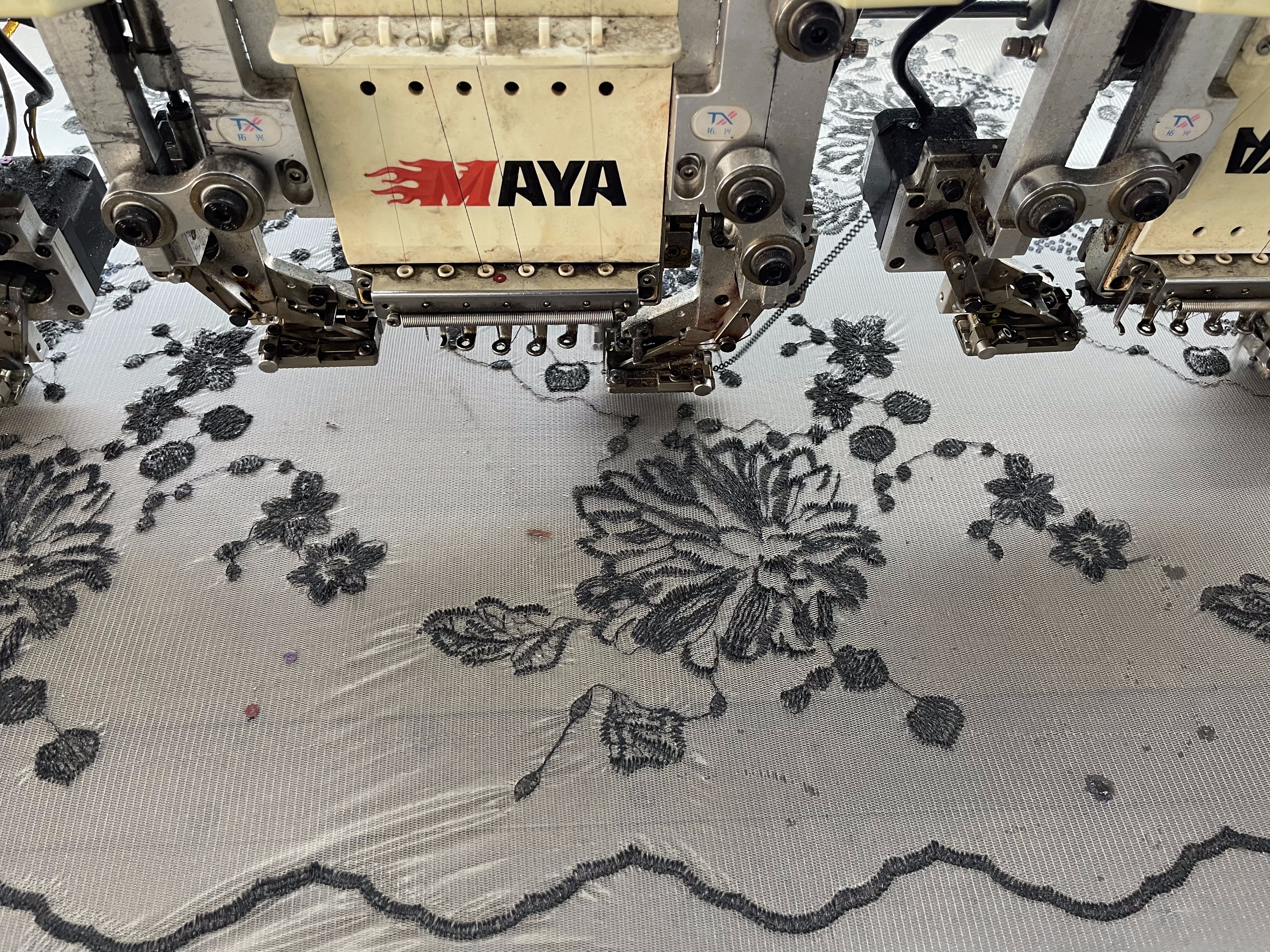
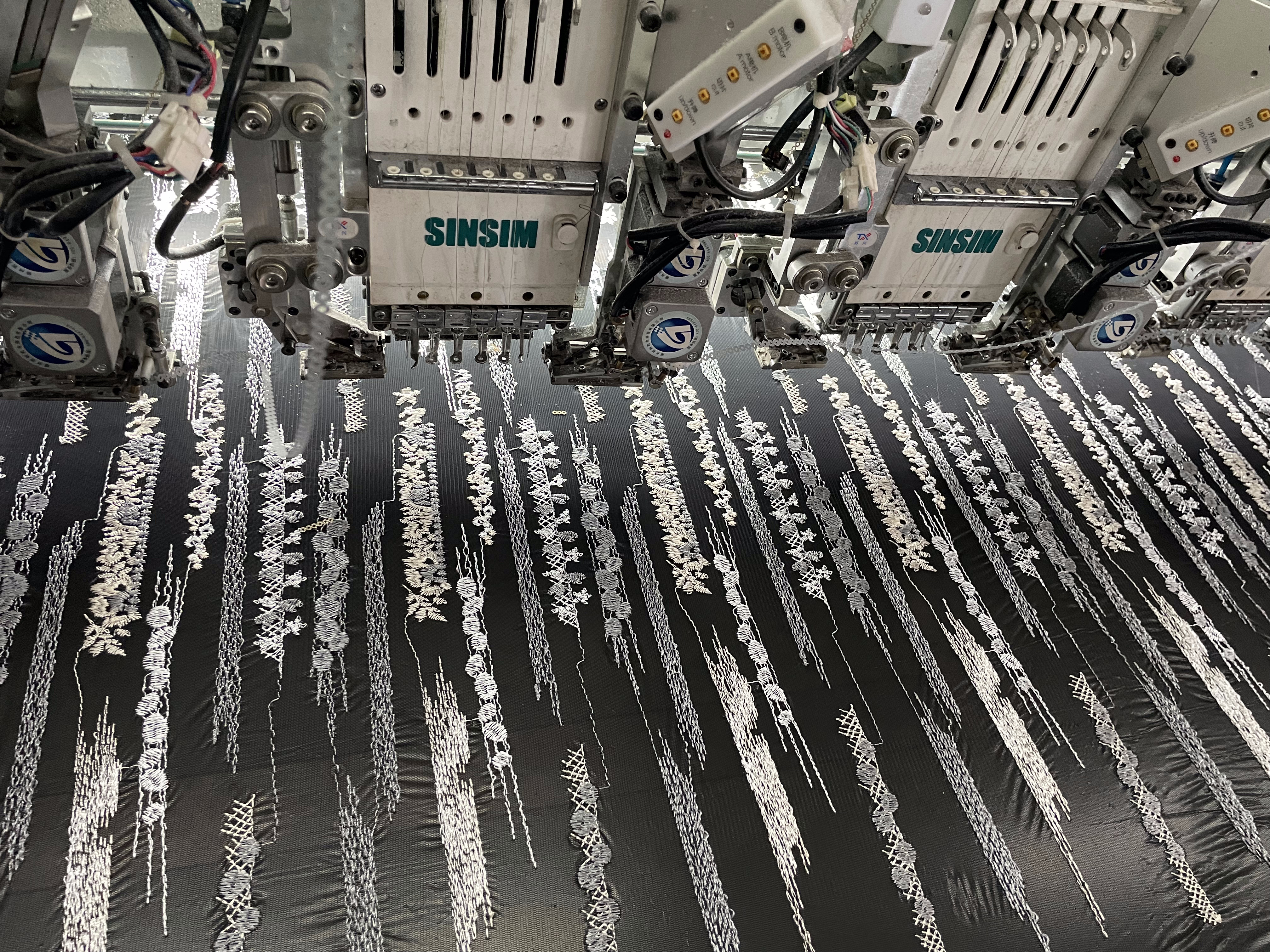
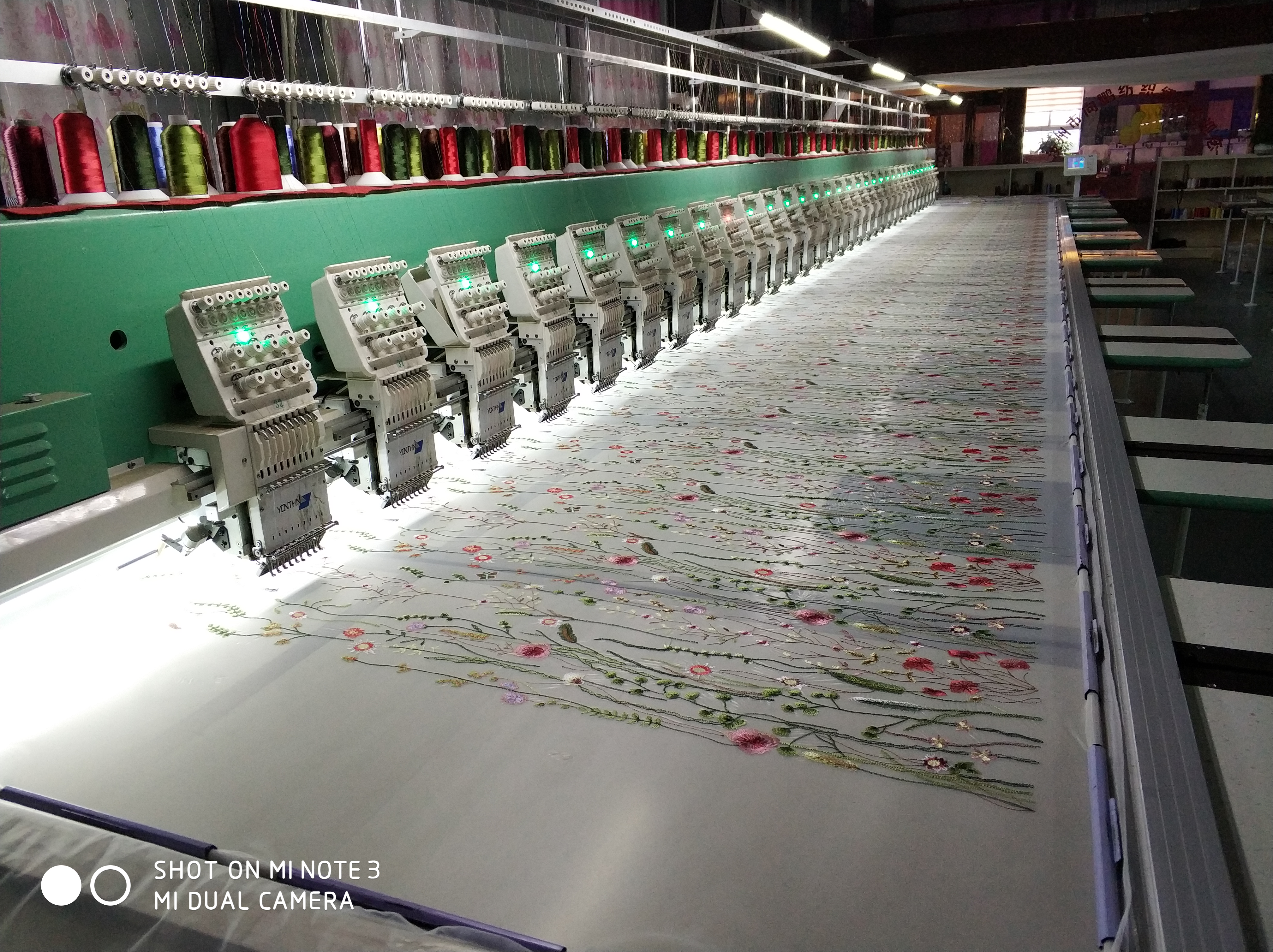 Computerized Embroidery Line
Production to the approved file, color sequence, stitches and
tension
Computerized Embroidery Line
Production to the approved file, color sequence, stitches and
tension
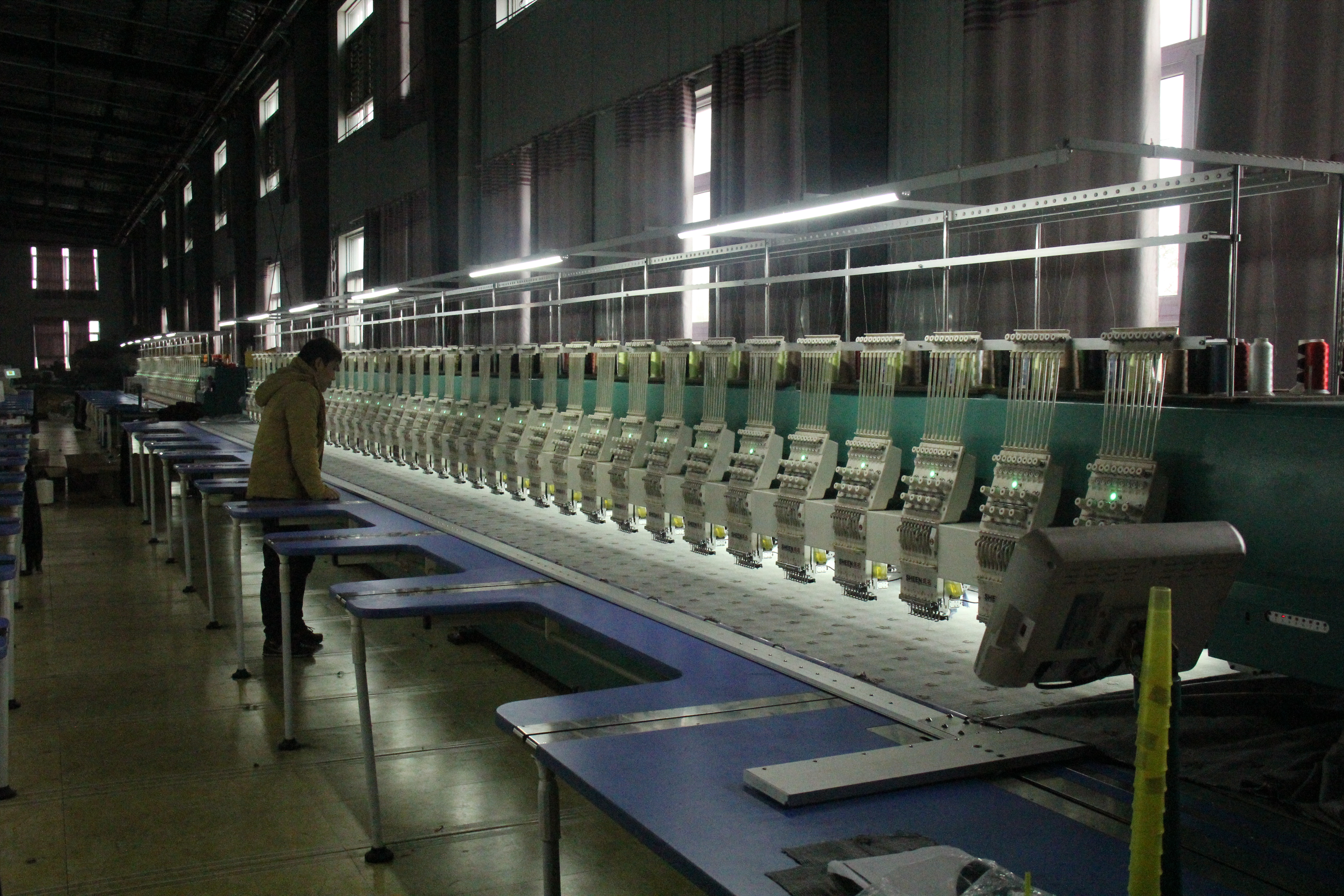 Pattern Digitizing
Artwork converted into stitch paths, color changes and process
instructions
Pattern Digitizing
Artwork converted into stitch paths, color changes and process
instructions
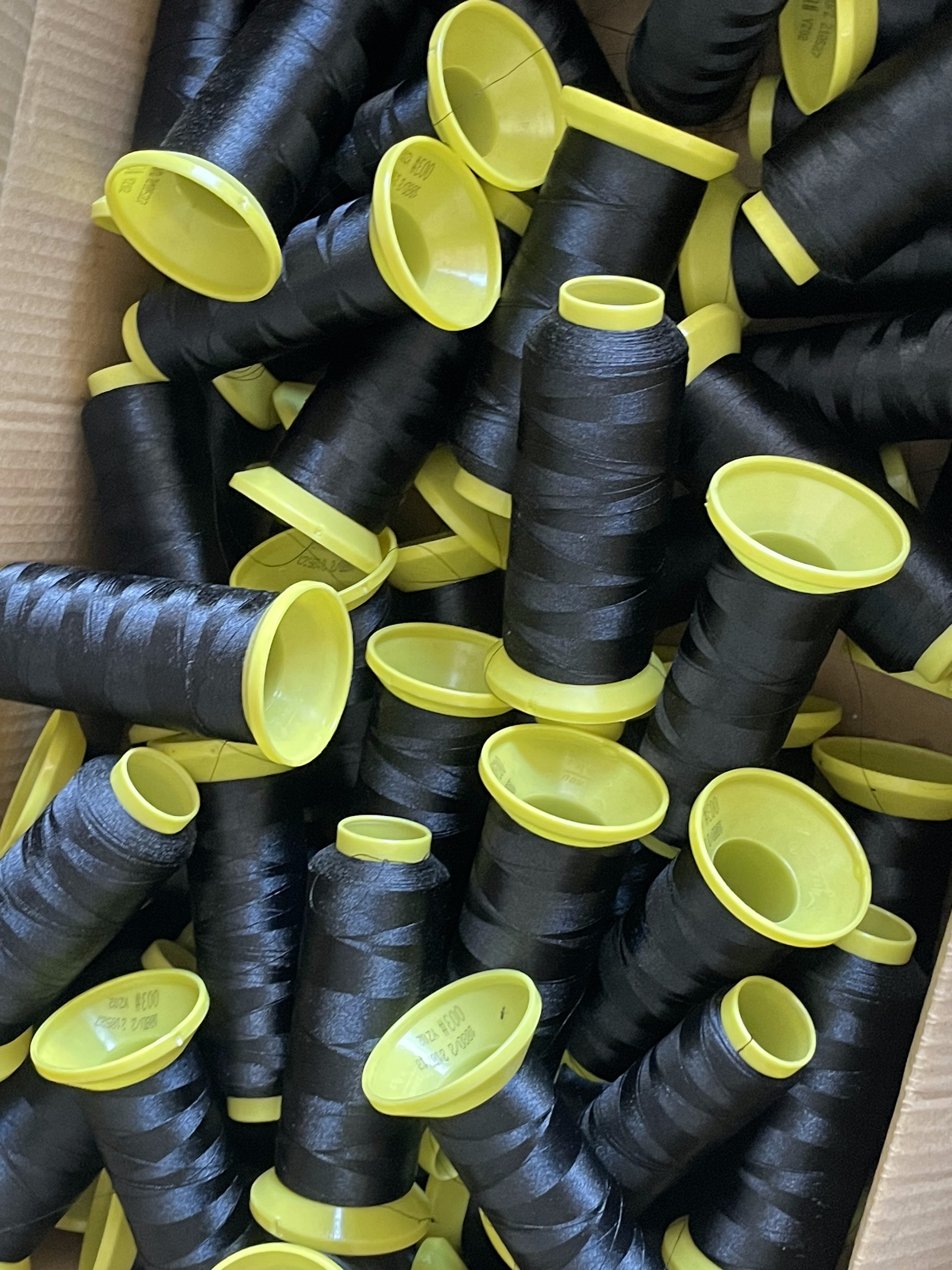
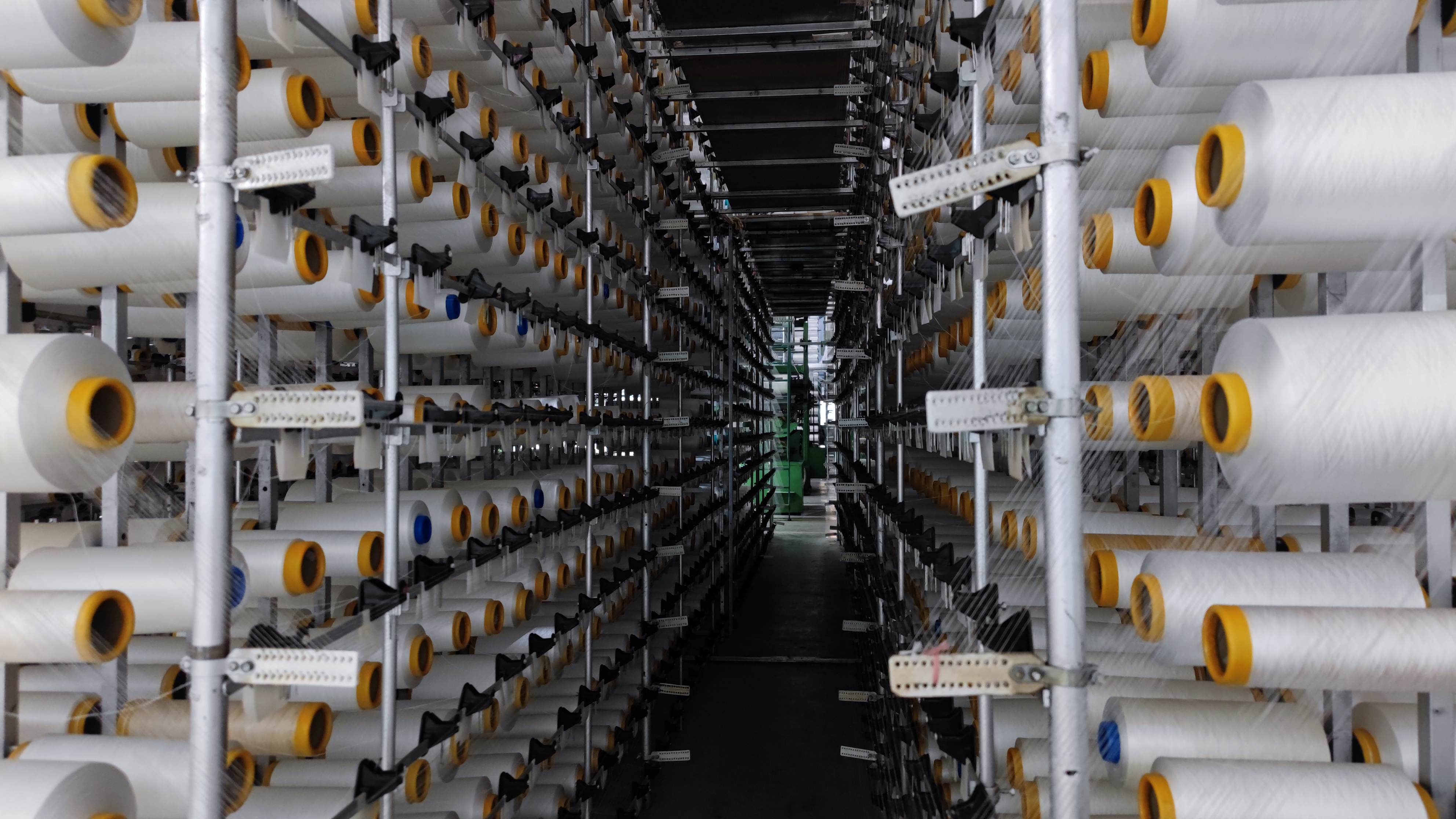 Material Preparation
Base fabric lots, thread shades, trims and quantities
checked
Material Preparation
Base fabric lots, thread shades, trims and quantities
checked
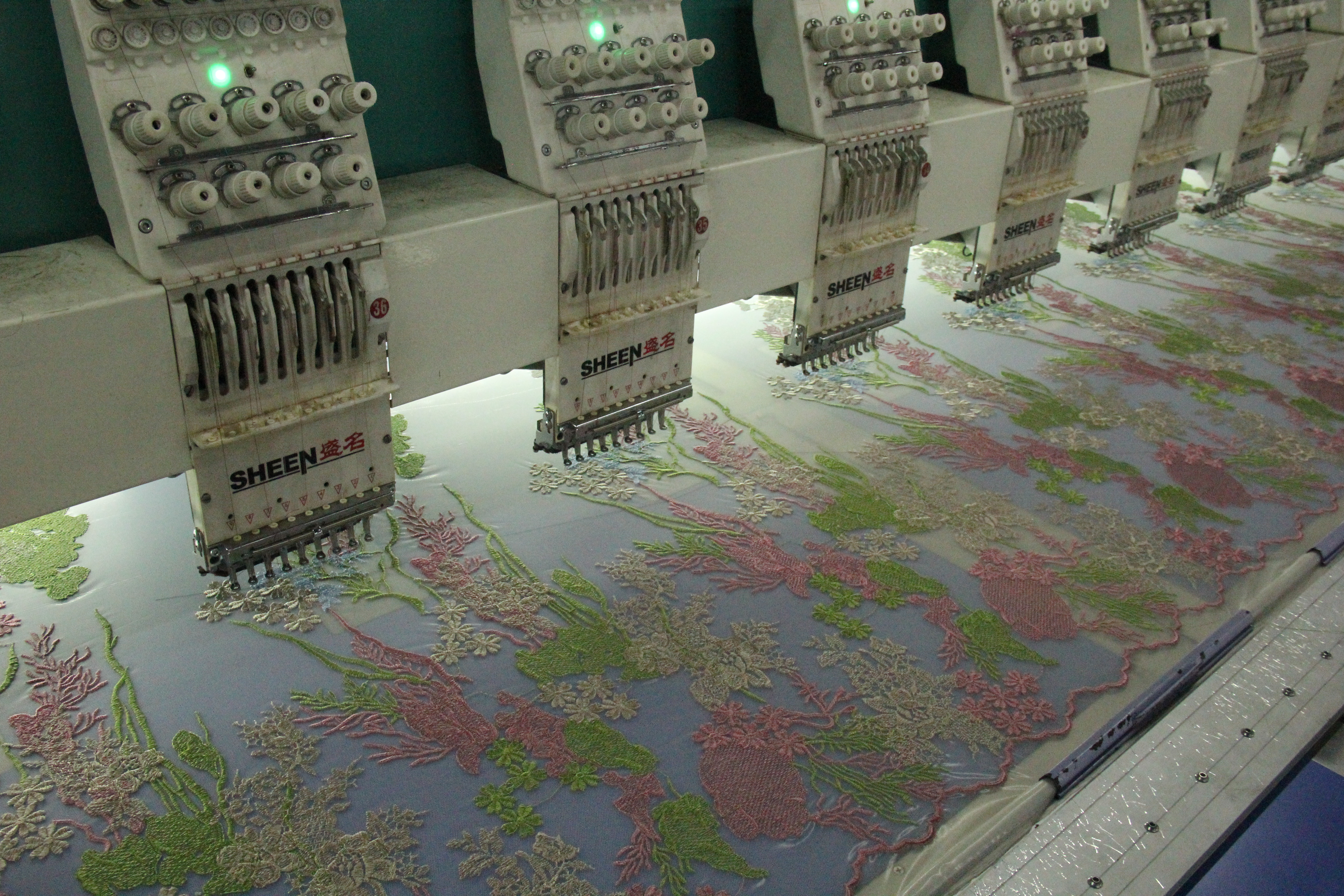 Trial EmbroideryRepeat, stitches, outline, color and fabric condition approved
 Post-embroidery Finishing
Water-soluble backing removal, trimming, setting or compound
processes
Post-embroidery Finishing
Water-soluble backing removal, trimming, setting or compound
processes
 Inspection and Repair
Missing stitches, thread breaks, jumps, stains, placement and
flatness
Inspection and Repair
Missing stitches, thread breaks, jumps, stains, placement and
flatness
 Rerolling, Packing and Shipping
Width, length, labels, quantity and packing
verification
Rerolling, Packing and Shipping
Width, length, labels, quantity and packing
verification
EMBROIDERY QUALITY CONTROL
We review the complete pattern and every stitch detail.
Controls cover pattern, stitches, base fabric and finishing, including repeat size, placement, loose ends, missing stitches, thread breaks, puckering and batch variation.
EMBROIDERY DEVELOPMENT PRIORITIES
Translate design language into stable, producible stitches.
Start with artwork, a physical sample, garment photo or target effect and Amber will confirm each production detail.
Artwork and Sample Analysis Review repeat, stitches, colors, base fabric and mixed techniques.
Digitizing Optimization Balance design fidelity, efficiency, stitch count and stability.
Base Fabric and TensionReduce puckering, stretching and distortion.
Color and Material Layers Build effects with thread, sequins, cords and applique.
Placement and RepeatsControl motif positions and all-over repeat alignment.
Bulk ConsistencyManage stitch files, materials, machines and finishing.
START AN EMBROIDERY PROJECT
Send artwork, a swatch or an effect image. We will begin with digitizing.
Share pattern dimensions, base fabric, colors, technique, application, quantity and target timing when available. A reference image is enough to begin evaluating the trial direction.