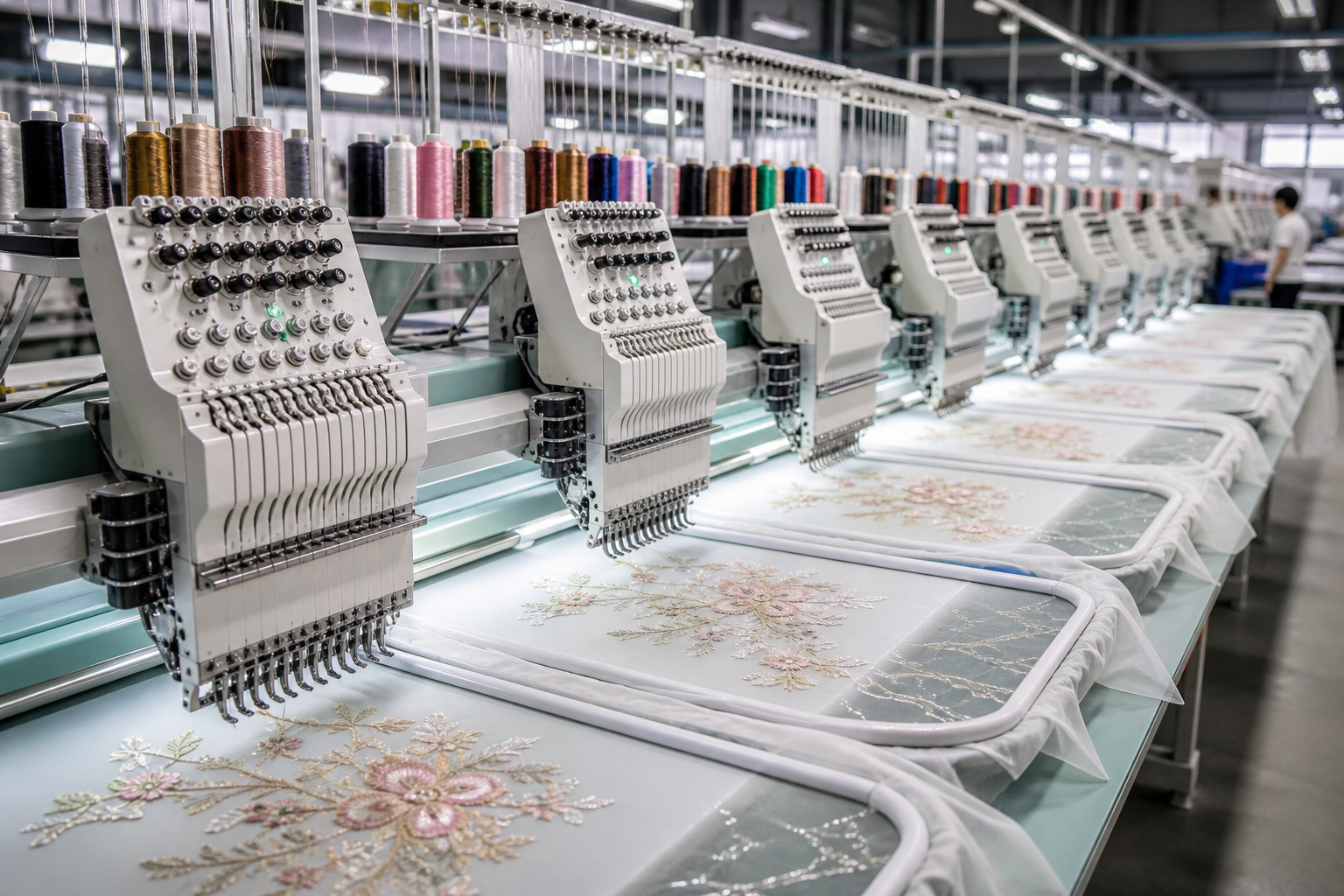
Quick answer: choose the embroidery base by end use first. Bridalwear usually needs soft mesh or tulle, structured fashion may use organza, and light decorative panels can use chiffon or fine net. Confirm transparency, handfeel, stitch density and sample stability before bulk order.
Start From The Final Product
Many buyers begin by choosing the pattern, but the base fabric decides whether that pattern can actually work in production. The same embroidery design can look soft, sharp, heavy or transparent depending on the base. Before asking for a sample, decide whether the fabric will become a wedding dress, evening dress, sleeve panel, trim, veil, home textile detail or accessory surface.
If the product touches skin, softness and backing comfort should come first. If the product needs shape, the base should have more structure. If the product needs a floating or luxury effect, transparency and stitch balance become more important.
Compare The Main Base Options
Mesh embroidery is the most common direction for apparel because it is flexible and visually light. Organza embroidery looks cleaner and more structured, especially for fashion pieces that need volume. Tulle is soft and familiar for bridalwear. Chiffon embroidery can feel elegant, but the design should not be too heavy or it may affect drape.
- Mesh base: balanced transparency, flexible use and common for dresses, sleeves and overlays.
- Organza base: crisp handfeel, suitable for structured dresses and premium decorative panels.
- Tulle base: soft bridal effect, useful for veils, wedding dress layers and romantic patterns.
- Chiffon base: light and flowing, better for gentle embroidery patterns with lower stitch weight.
Check Density, Weight And Stability
Embroidery density affects both visual fullness and cost. A dense pattern may look rich, but it can also make the fabric heavier, stiffer and more expensive. A lighter pattern may save cost, but if it is too sparse the design may look weak on the final garment.
For B2B orders, ask the factory to confirm width, weight, repeat size, thread color, base fabric composition and sample handfeel. If the design includes sequins, beads or cord, confirm whether these elements are secure enough for the target product.
What To Send Before Sampling
A clear sample request saves several rounds of communication. Send the target application, reference photos, color direction, expected width, estimated quantity and any physical sample if available. If you are not sure which base is best, send the product photo and let Amber recommend two or three base options for comparison.
- Target use: bridalwear, eveningwear, garment panel, trim, home textile or accessory.
- Visual target: soft, luxury, shiny, structured, transparent or high-density embroidery.
- Production target: sample only, small order test, seasonal collection or repeat bulk order.